Our Blog

Dental Adulting

February 12th, 2025

Now that you’re entering the working world, or heading off to college, or pursuing any of the many adventures awaiting you in adult life, you’re ready to take on more adult responsibilities. And one of those responsibilities is making sure you maintain your dental health.  

Luckily, it’s not that hard! Successful adulting often means simply making small proactive choices which add up to big long-term benefits. So, let’s look at a few of the everyday habits of dentally successful adults.

Choose a Healthy Lifestyle

  • Eat well.

Just like the rest of our bodies, our teeth and gums need a healthy diet to thrive. Sugar-fueled study sessions and energy drink-filled work hours should be the rare exception, not the norm. A diet rich in vitamins and minerals keeps gums healthy and enamel strong.

  • Don’t use tobacco products. 

Cigarettes, cigars, pipe smoking, chewing tobacco—any form of tobacco products, especially combined with alcohol use, can greatly increase your chances of developing mouth and throat cancers.

  • Talk to your doctor about the HPV vaccine.

HPV (human papillomavirus) can also cause mouth and throat cancers. The American Academy of Pediatrics recommends the HPV vaccine for kids ages nine through 12. If you haven’t been vaccinated yet, talk to Dr. Sardzinski, Dr. Wilken, Dr. Stanley, Dr. Hanson and Dr. Heying about the potential benefits of the HPV vaccine. 

Keep Up with Your Orthodontic Care

If you’ve spent several of your teen years in braces or aligners creating a beautiful, healthy smile, you don’t want to see all your hard work go to waste. Retainers are designed to make sure your teeth stay just where they belong for a lifetime. 

When retainers aren’t worn as directed, especially when braces or aligners first come off, the teeth can shift back to their old positions. Sometimes going back to your regular retainer schedule can fix any minor movement, but sometimes patients need to go back for repeat orthodontic treatment.

How to avoid orthodontic do-overs?

    • If you have a retainer, wear it as scheduled to maintain your alignment and healthy bite. 
    • Put your retainer in a case when you’re not wearing it. A bent or broken retainer won’t keep your teeth aligned properly and can damage delicate oral tissues!
    • If your retainer is damaged, see the dental team at Blair Ridge Dental in Hiawatha, IA ASAP for repair or replacement.

 Practice Good Oral Hygiene

  • Brush at least twice a day, for two minutes each time. 

Plaque begins to build up within hours after your last brushing. Removing plaque morning and evening also removes the cavity-causing bacteria which live in plaque. These bacteria erode enamel and lead to cavities.

  • Floss at least once a day. 

Flossing helps remove plaque from your gumline. When plaque accumulates over time, it becomes tartar, a substance so hard that you’ll need a dental professional to remove it. The bacteria in plaque and tartar irritate your gums, and this irritation is the beginning of gum disease. Early-stage gum disease (gingivitis) can often be reversed with better brushing and flossing habits—but, even better, help stop gum disease before it starts with daily flossing.

  • See your dentist regularly. 

If you’ve had the same dentist since childhood, you’ve probably developed a great partnership, typically visiting your dentist twice each year for an exam and a professional cleaning. 

Make sure you make space in your busy adult life to keep your smile its healthy, sparkling best by continuing to schedule regular cleanings and exams. This is the best way to clean away any plaque or tartar you may have missed, and, most important, to catch any small problems before they become bigger ones. 

Not so difficult, right? In fact, you’ve probably adopted most of these healthy habits already. Take charge of your dental health now, make good habits a part of your daily routine, and you’ll be prepared to enjoy a lifetime of healthy, attractive, adult smiles!


Recovering from Oral Surgery

February 5th, 2025

If you need oral surgery, Dr. Sardzinski, Dr. Wilken, Dr. Stanley, Dr. Hanson and Dr. Heying and our team will use our expertise and training to ensure that you have the best possible surgical outcome. And we want to make sure you have the best possible outcome for your recovery as well. Here are a few of the most common aftercare suggestions for making your healing as comfortable and rapid as possible.

  • Reduce Swelling

Ice packs or cold compresses can reduce swelling. We’ll instruct you how to use them if needed, and when to call our Hiawatha, IA office if swelling persists.

  • Reduce Bleeding

Some amount of bleeding is normal after many types of oral surgery. We might give you gauze pads to apply to the area, with instructions on how much pressure to apply and how long to apply it. We will also let you know what to do if the bleeding continues longer than expected.

  • Reduce Pain or Discomfort

If you have some pain after surgery, over-the-counter pain relievers such as ibuprofen might be all that you need. We can recommend those which are best for you. If you need a prescription for pain medication, be sure to take it as directed and always let us know in advance if you have any allergies or other reactions to medications.

  • Recovery-friendly Diet

Take it easy for the first few days after oral surgery. Liquids and soft foods are best for several days following surgery. We will let you know what type of diet is indicated and how long you should follow it depending on your particular procedure. We might, for example, recommend that you avoid alcohol and tobacco, spicy, crunchy, and chewy foods, and hot foods or beverages for several days or several weeks.

  • Take Antibiotics If Needed

If you have been prescribed an antibiotic, be sure to take it as directed. If you have any allergies to antibiotics, let us know in advance.

  • Protect the Wound

Do NOT use straws, smoke, or suck on foods. Avoid spitting.  Part of the healing process can involve the formation of a clot over the surgical site which protects the wound. If the clot is dislodged by suction or spitting, it can prolong your recovery time, or even lead to a potentially serious condition called “dry socket.”

  • Maintain Oral Hygiene

Depending on your surgery, we might recommend that you avoid rinsing your mouth for 24 hours, use salt water rinses when appropriate, and keep away from the surgical site when brushing. It’s important to keep your mouth clean, carefully and gently.

  • Take it Easy!

Rest the day of your surgery and keep your activities light in the days following.

These are general guidelines for recovery. If you have oral surgery scheduled, we will supply you with instructions for your specific procedure, and can tailor your aftercare to fit any individual needs. Our goal is to make sure that both your surgery and your recovery are as comfortable as possible.

Top Reasons People Choose Veneers

January 29th, 2025

Dental veneers are a way to correct and transform your smile by using “contact lens”-thin shells of porcelain or ceramic material and bonding them to the front of your teeth. They are strong and durable, look and feel like natural teeth, and improve your smile immediately. Here are some of the top reasons to consider getting dental veneers.

They Correct Multiple Cosmetic Issues

Dental veneers can help with cosmetic and dental health issues, and treat multiple problems at once. Some common reasons that individuals choose veneers is to close gaps and spaces between the teeth, fix alignment issues, change the overall shape and appearance of a tooth, whiten a smile by covering stained or discolored teeth, and cover chipped or cracked teeth.

If you have teeth that are already worn down and weakened, veneers help prevent further damage by covering them with a thin, tooth-colored shell.

Durability

Dental veneers are also extremely durable. They last several years longer than traditional composite fillings. You’ll have peace of mind when you choose veneers, knowing that you’ll have your new smile for many years. On average, dental veneers last about ten to 15 years. Just like your natural teeth, when you take good care of your veneers, they last longer.

Easy to Clean and Maintain

Keeping your veneers healthy and white is easy: You simply brush and floss them the way you do all of your teeth. Shortly after having your veneers installed, you’ll begin to think of them as your natural teeth because the thin shells lie right on top of your existing teeth. This makes it easy to floss and brush the way you normally would and keep them as clean as possible.

The Process is Simple

Getting dental veneers is a quick and easy process. You have a few short visits at Blair Ridge Dental and see results. On average, it only takes about four weeks from your first appointment to your last to complete the veneer process.

If you are considering getting dental veneers, schedule a consultation appointment with Dr. Sardzinski, Dr. Wilken, Dr. Stanley, Dr. Hanson and Dr. Heying to find out exactly how they can benefit you.

Straight Talk about Your Smile

January 22nd, 2025

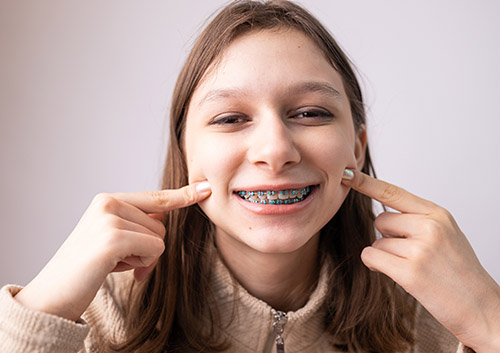
Braces and aligners help straighten teeth and create a confident, attractive smile. And those visible benefits are amazing! But orthodontic treatment has an even more important purpose than transforming the appearance of your smile—and that’s protecting and improving your oral health.

If you’re ready for orthodontic treatment, you know you can look forward to a future of beaming smiles. You can also look forward to healthier teeth and gums and a more comfortable and functional bite. For some people, orthodontic treatment can make speaking and eating easier, and could even contribute to a better night’s sleep.

How can orthodontic treatment accomplish these goals? Let’s set the record straight!

Protecting Tooth and Gum Health

  • Lowering Your Risk of Cavities

Perfectly aligned teeth are considered aesthetically pleasing, but there’s a more practical reason to appreciate straight teeth. Crooked and overlapping teeth make it easier for food particles and plaque to stick in between the teeth and harder for your brush to remove them. Straight teeth allow you to remove cavity-causing plaque more effectively and with less effort.

  • Promoting Healthy Gums

When plaque and tartar build up around the gums, the gum tissue becomes irritated, which is the first stage of gum disease. When teeth are straight and evenly spaced, brushing and flossing are easier and more effective, and your gums reap the benefits.

Creating a More Functional and Comfortable Bite

A malocclusion occurs when the teeth and jaws aren’t properly aligned—they don’t fit together the way they should when you close your mouth. There are different types of bite problems, and these can impact both your oral health and your overall health depending on the type and the severity of the malocclusion. Once a malocclusion is corrected, patients can experience:

  • Stronger Teeth and Healthier Gums

Teeth and jaws which don’t fit together properly put extra pressure on your teeth and gums, leading to problems such as worn enamel, cracked teeth, and gum recession. Protect your oral health by creating a well-aligned bite.

  • A Pain-Free Bite

Left untreated, malocclusions can cause problems like temporomandibular joint disorder (TMD), headaches, face and neck pain, earaches, limited jaw movement, and painful chewing. Correcting your bite will protect your temporomandibular joint from harm and will relieve the discomfort and pain caused by a malocclusion.

Other Possible Benefits of Treatment

For those with more serious malocclusions, orthodontic treatment might improve daily life in unexpected ways:

  • Improved Speech

It takes a lot of coordination to produce different sounds. The lips, the tongue, the alveolar ridge which holds our teeth, the hard and soft palates, parts of the throat, and, yes, the teeth all play a part in creating speech. Some kinds of malocclusions contribute to speech disorders such as lisps, which orthodontic treatment can help correct.

  • Improved Digestion

Digestion starts in the mouth, not the stomach! As we chew, we break down our food into particles which are easier for the stomach to digest. If you can’t chew properly because your teeth are misaligned or a bad bite makes it too painful to chew food as thoroughly as you should, you won’t be getting the full nutritional benefits of your healthy diet. Orthodontic treatment helps you bite down painlessly and break down foods easily for better digestion.

  • Improved Sleep

Bite problems can sometimes lead to sleepless nights. More serious malocclusions may cause mouth breathing, which, in turn, can affect the quality of your sleep. If you’re having trouble sleeping, a sleep specialist can help you discover the source of your problems. If your troubled sleep is caused by tooth or jaw misalignment, orthodontic treatment might be the solution.

Talk to your dentist to learn about the many options available to align your teeth and jaws for a healthy, attractive smile. Braces or aligners might be all you need to correct a mild malocclusion. Appliances and headgear can influence the growth and position of the jaw if needed. In more severe cases, surgery, together with braces, can create a proportional, healthy bite.

Whether it’s a confident smile, healthier teeth and gums, a functional, comfortable bite, or any of the other benefits orthodontic treatment can bring, talk to the dental team at Blair Ridge Dental in Hiawatha, IA to discover how orthodontic treatment can help you achieve all of your smile goals!

Kind
Words from Our Patients

Read more

“They are so understanding and patient. They give you multiple options to make your care more individualized and work for you. I have never been happier with a dentist. 100% would recommend them to everyone.”- Amber L.

“Thank you for excellent patient care. I am grateful for such wonderful staff here at Blair Ridge Dental. You all should be commended for your dedication, excellence, and commitment.”– Kristina

“I’m so happy with the smile you have given me. When I look at my pictures I feel such an overwhelming feeling of joy. You’ve given me the smile that I’ve always wanted.”– Feryl